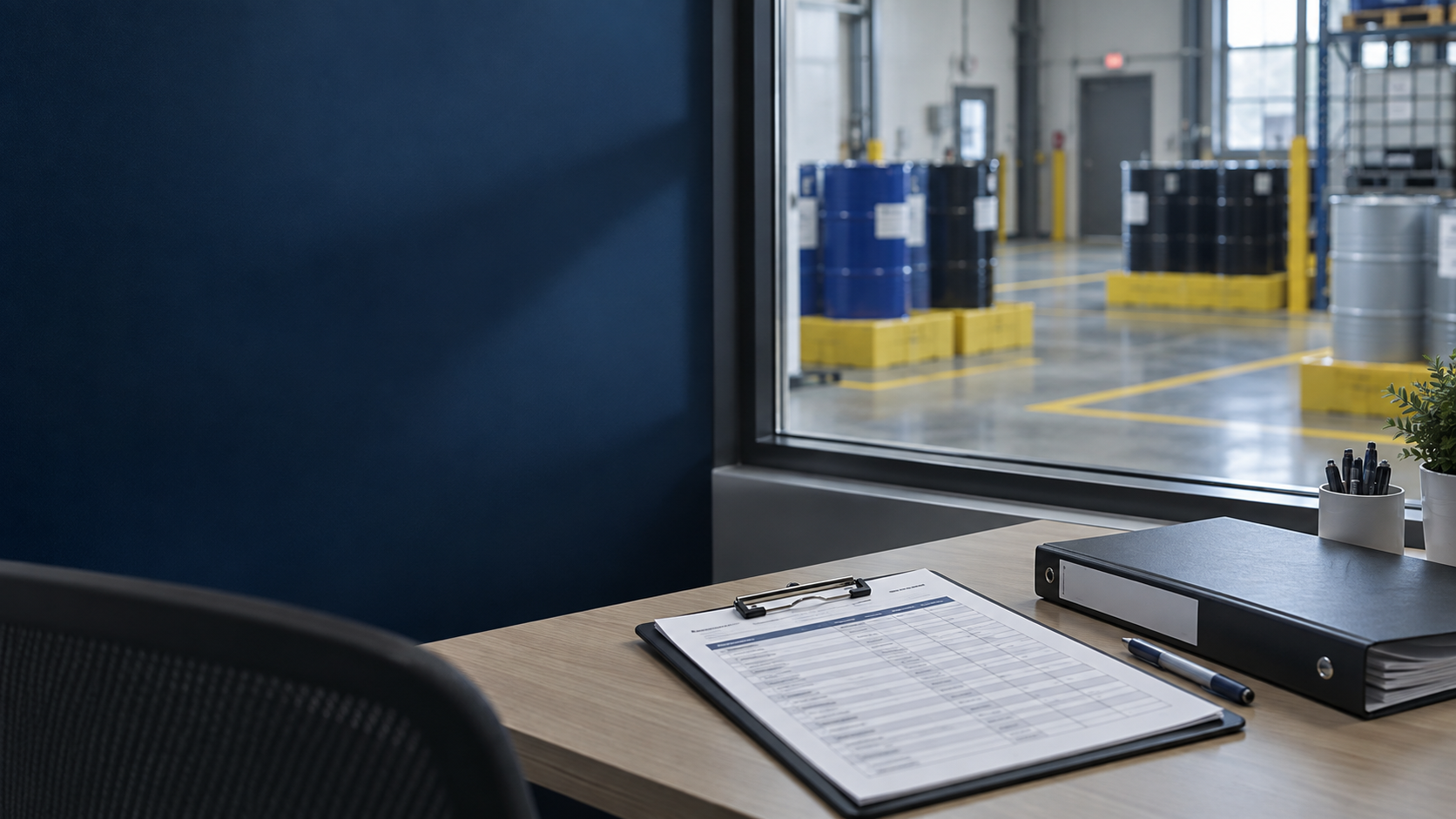
Industrial solvents and cleaning agents keep production lines moving, parts degreased, and surfaces ready for painting, coating, or assembly. But once those liquids are spent, contaminated, or out of spec, they can quickly become a compliance headache for facility managers. March often brings spring maintenance and deep-cleaning projects, which can increase solvent use and the amount of leftover materials that need attention. The key is treating solvent waste as a controlled operational stream—not an afterthought at the end of a shift.
In many workplaces, solvent waste is generated in small amounts across multiple areas, which makes it easy to mislabel, mix incompatible materials, or store containers improperly. That is where a strong hazardous waste management plan helps: consistent collection points, clear labeling, and a defined pickup process. This article covers what counts as solvent waste, why it’s considered hazardous, what can go wrong when it’s mishandled, and practical steps to prepare for professional hazardous waste disposal with American-Enviro.
What counts as industrial solvent waste
Industrial solvent waste generally includes used or excess liquids designed to dissolve oils, resins, inks, adhesives, or grime. Common examples in business settings include degreasers, parts-washing fluids, paint prep cleaners, and certain equipment-cleaning solutions. Even “spent” solvent that looks clear can carry dissolved contaminants that change how it must be handled.
Typical generators include manufacturing facilities, metal fabrication shops, automotive and equipment maintenance bays, printing operations, furniture and cabinet shops, and warehouses that use solvent-based cleaners for maintenance. Solvent waste can come from routine tasks such as wiping down machinery, cleaning spray equipment, flushing lines, or maintaining tools and fixtures.
One challenge is that solvent waste is often created in different departments, sometimes by different shifts, and placed into various containers. Consolidating control—without mixing incompatible materials—helps reduce confusion and supports safe waste disposal practices throughout the facility.
Why solvents are hazardous and what compliance looks like
Many industrial solvents and cleaning agents are considered hazardous because they may be flammable, toxic, or harmful if released to the environment. Vapors can pose indoor air concerns, and some ingredients can irritate skin or eyes with direct contact. When solvents are contaminated with metals, oils, or other chemicals from your process, the risk profile can increase.
From a regulatory standpoint, requirements often depend on the solvent type, contamination, and how your site accumulates and ships waste. In general terms, EPA and state rules under the RCRA framework may apply, and expectations often include proper container condition, labeling, accumulation practices, and shipping paperwork. Requirements vary by state and facility profile, so it’s smart to align with your compliance team and vendor guidance.
A professional partner supports hazardous waste management by helping keep profiles, manifests, and approvals organized so waste moves off-site through appropriate channels.
Real-world risks of improper disposal
Improper handling of solvent waste can create immediate safety hazards and long-term liability. Flammable solvents stored near ignition sources can contribute to fires, while unsecured containers may leak and damage floors, equipment, and nearby stored goods. Incompatible mixtures—such as combining different cleaners or adding unknown liquids to a drum—can generate heat, pressure, or dangerous fumes.
Environmental risks are also significant. A small spill that reaches a floor drain or outdoor area can lead to costly cleanup and reporting obligations. Even “evaporating” solvent waste to get rid of it can cause air quality problems and trigger complaints or enforcement attention.
On the business side, documentation gaps can become a problem during audits, customer reviews, or incident investigations. Using a qualified hazardous waste disposal provider helps reduce the chance of missteps, supports environmentally safe disposal, and protects operations from preventable disruptions.
Storage, labeling, and pickup readiness with American-Enviro
Good solvent-waste control starts with simple, repeatable steps. Keep containers closed when not adding waste, store them in a designated area, and use labels that match what is actually inside. Avoid mixing different solvent streams unless your internal procedures and waste partner confirm compatibility. Separating solvent liquids from solvent-contaminated solids (like wipes) can also make downstream handling smoother.
- Use compatible containers in good condition with tight lids
- Label containers clearly and consistently for the waste stream
- Segregate flammables and keep away from heat and sparks
- Maintain spill control supplies near accumulation areas
- Stage waste for pickup so containers are accessible and countable
American-Enviro supports safe waste disposal by coordinating pickup, transport, and environmentally safe disposal through appropriate facilities, while helping businesses stay organized with required documentation. When you’re ready to schedule service, visit American-Enviro.com or call 800-200-3581.
Industrial solvents are essential to many processes, but the waste they generate needs disciplined handling. A clear internal routine for storage, labeling, segregation, and staging reduces day-to-day risk and makes it easier to stay prepared for inspections, customer audits, and operational changes. Most importantly, it keeps employees safer and helps protect your site and the surrounding environment.
American-Enviro provides hazardous waste management services designed for real facilities: practical guidance, reliable pickups, and documentation support that fits your workflow. If your team is dealing with spent solvents, contaminated cleaning agents, or recurring maintenance waste streams, don’t leave it to chance. Partner with American-Enviro for hazardous waste disposal and environmentally safe disposal you can stand behind. Contact American-Enviro today at American-Enviro.com or call 800-200-3581 to discuss your solvent waste and schedule service.